
November 19, 2026
Working Together to Define What Comes Next
Earlier this month, Myeloma Canada hosted its annual Scientific Roundtable with the theme, Operationalizing Cure in Multiple Myeloma: Canadian Perspectives and Research Priorities. We invited researchers, clinicians, nurses, industry representatives, advocates, and people living with myeloma to share one room and one conversation.
Each of us brings a valuable perspective to myeloma. Researchers bring scientific knowledge and discovery. Clinicians and nurses bring experience in caring for people every day. Industry brings expertise in developing and delivering new treatments. Patients and advocates bring lived experience that helps keep our work grounded in what matters most. Meetings like this give us the opportunity to learn from one another, build on our shared priorities, and move forward together to improve the lives of people living with myeloma.
What would it mean to operationalize a cure?
The question at the centre of the Roundtable was a big one: what would it mean to operationalize a cure of myeloma? It is easy to treat that as a purely scientific question, with a definition set in a lab or a clinical trial protocol. The patient panel early on the first day was a reminder that a definition goes beyond scientific discussion. It reaches people’s lives.
The panel included Rinat Avitzur, Chair of our Patient Advisory Council; Gisèle Fournier, Quebec Representative on the Patient Advisory Council; and Lorelei Dalrymple, Chair of the Myeloma Canada Board of Directors. They spoke about what it means to live with the way myeloma is managed today, and the very real concerns they have should the definition of cure that is being discussed in scientific forums be applied in clinical settings, access conversations, treatment coverage, and other areas of the healthcare system.
They spoke about what monitoring looks like over time. They spoke about access to the treatments that could give them the best results, and why the best science matters only if people can reach it. And they spoke about the emotional weight of being discharged from a cancer centre. For many people, leaving that place can feel like losing the team that has walked beside them, even when it is described as good news.
[Editor’s note: Read a full summary of the panel discuss.]
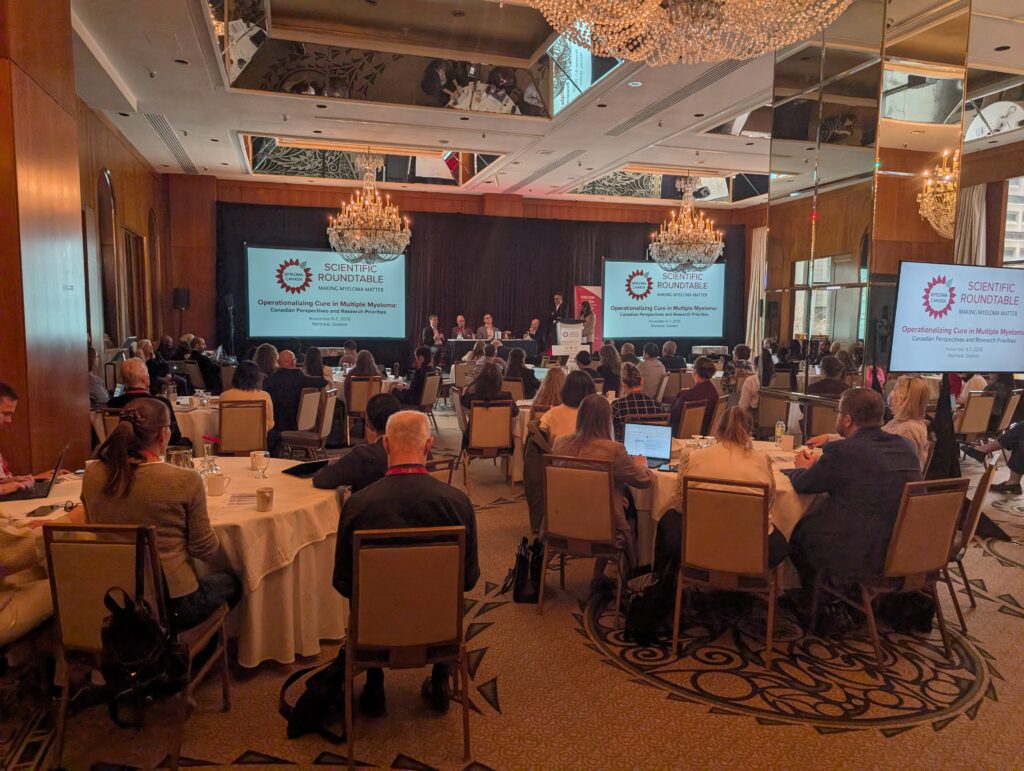
[Photo: Myeloma Canada Scientific Roundtable, 2026, in Montreal]
I was struck by how directly these experiences connect to the scientific discussion. How a cure is defined can shape how people are monitored, which treatments they can reach, and what support they receive after active care ends. These are not secondary details. They are part of the answer. Hearing them alongside the research presentations made it clear that the people most affected by these decisions need to be part of making them.
A critical time for advocacy
Advocacy is not something that happens after the science is done. It happens every day, and at every moment we must share your story and your challenges to make sure every decision is made with your needs in mind. It means making sure patient voices are heard where the questions are being framed, not only where the answers are being applied. Rinat, Gisèle, and Lorelei brought exactly that, and the conversation was better for it.
One conversation does not change everything, and I will not pretend otherwise. The Roundtable was an important step. The work that follows is slower and less visible: continuing to talk, continuing to listen, and carrying what we heard back into our programs, our advocacy, and our partnerships. Advocacy is not about what you did today. It is about what you will be doing tomorrow and the days after, until you reach your end goal. It takes dedication, perseverance, patience, and love for the cause, which we have in abundance in our team.

That work is what our We Don’t Stop end-of-year message is about. It is not a promise that the path is easy, or that the answers are close. It is a commitment to keep showing up, alongside researchers, clinicians, and people living with myeloma, for as long as it takes. Education, support, research, and advocacy only continue because people choose to keep them going, and I am grateful to everyone who does.
To Rinat, Gisèle, and Lorelei, thank you for your honesty and your generosity. To everyone who joined us at the Roundtable, thank you for making room for these conversations.
Together, we keep going until myeloma is cured.
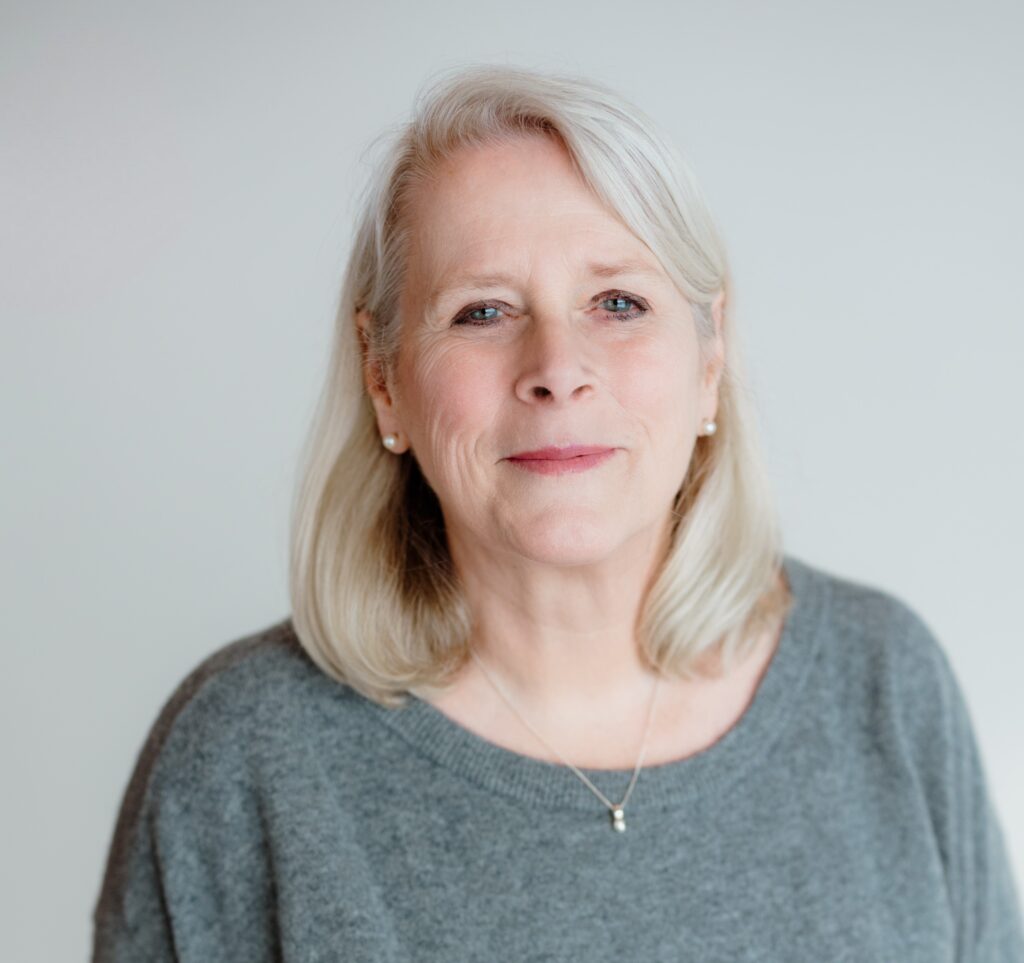
Martine